
By: Bridget Pouliot
I’ve liked music since I was very young. I was the second-grader at the talent show who sang “The Show Must Go On” by Queen, despite hearing loss that made for some very interesting, unintentional parody lyrics. I was musically with the trends of the early 2010s (Frozen) in the safety of my basement, where the world was my stage, the audience consisted of my mother and my siblings who I forced to be there, and I did, in fact, own an Elsa dress I tried to quick-change into. However, for some reason, I decided the final goodbye from the lead singer of a 70s rock band would be more popular in the show than the current Disney movie that was taking homes around the world by storm.
So, yeah. Music. Been in my veins for a while, even if it came out in bizarre ways.
Similar to most kids, I did not exactly enter high school with a plan for my future. I especially did not ever consider being a music major. I was no Ben Passarelli, Brianna Callahan, or Brodie McKay. And I knew that.
And then suddenly I was auditioning for college music programs as a senior… so maybe that wasn’t the truth anymore. But recently, I had an experience that – not to be dramatic – changed my life.
This was my fourth year participating in Rhode Island’s All-State Chorus. All-State is always an experience; working with incredible conductors on challenging music for two full days before performing on the Sunday is as awesome of an experience for any aspiring musician as can be imagined. This year specifically, I’d placed first of the sopranos at auditions, so I was thrilled about my progress over the past four years and the fact that I was finishing All-State on a high note (literally, singing high notes). However, there are often drawbacks that include other All-State students not knowing their music as well as they probably should and the awful timing of All-State in relation to other events (All-State weekend is almost always the weekend heading into Choral Festival week – my freshman year it was the weekend leading into both that and tech week – and my body has an affinity for breaking down and making me sick when I’m doing so much).
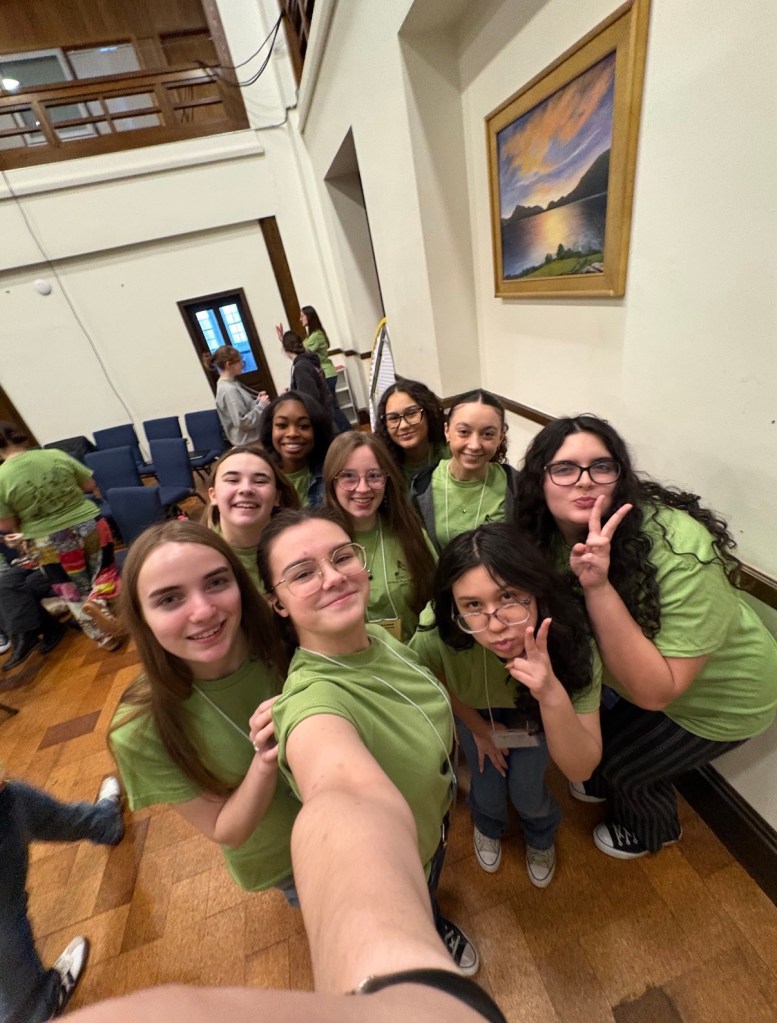
All-State was already going to be an exciting experience this year because the conductor for the senior mixed chorus was Dr. Pearl Shangkuan. She is a phenomenal, world renowned conductor, and the music she picked out for us was hard – much of it was from her choral series and were pieces she did with advanced choirs. So, All-State was already a bit intense because while we were extremely lucky to be working under her direction, the All-State coordinators really wanted us to do well and make Dr. Shangkuan proud. Then, they dropped another bombshell on us.
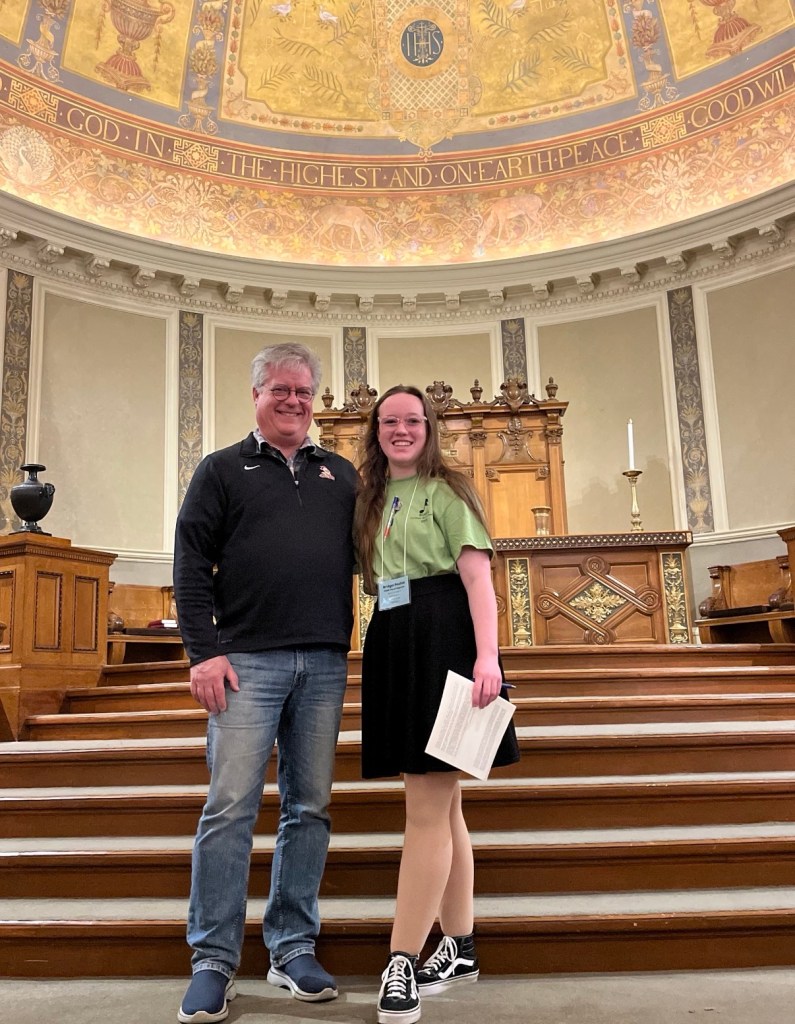
Imagine: it’s 8 p.m. on February 4th, and I am in Providence at the disastrous first All-State rehearsal (the one rehearsal we have with local music educators before we come together with our conductors in March for the weekend). I am spent; I have just found out I’m presenting my senior project the next week and I maybe don’t know my music as well as I potentially should because the two weeks prior to the rehearsal (when they sent the music) were two of the busiest weeks I’ve experienced. I am ready to go home when we are nonchalantly told that the arranger of “John the Revelator”, which the senior mixed choir is going to perform in the upcoming concert, is going to be working with us as our collaborative pianist.
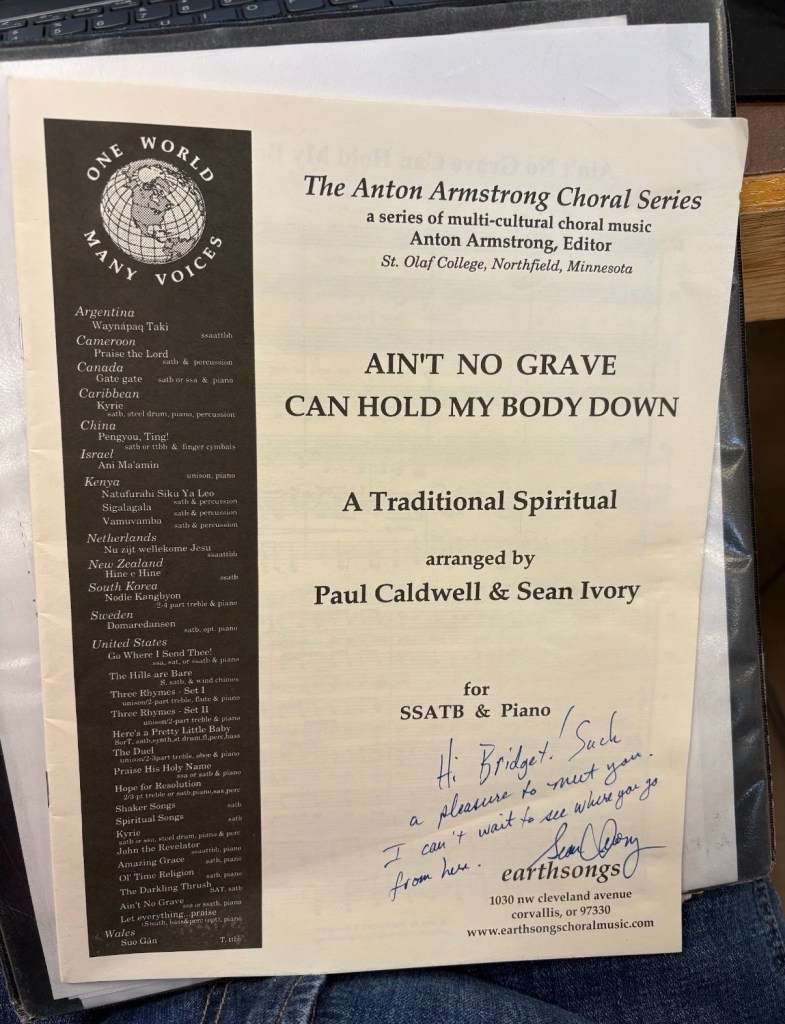
This musician’s name is Sean Ivory. The Sean Ivory. Who is one half of the incredible duo who arranged the song “Ain’t No Grave Can Hold My Body Down”.
So, I’ve never been cool about anything… and especially not this. Let me tell you why.
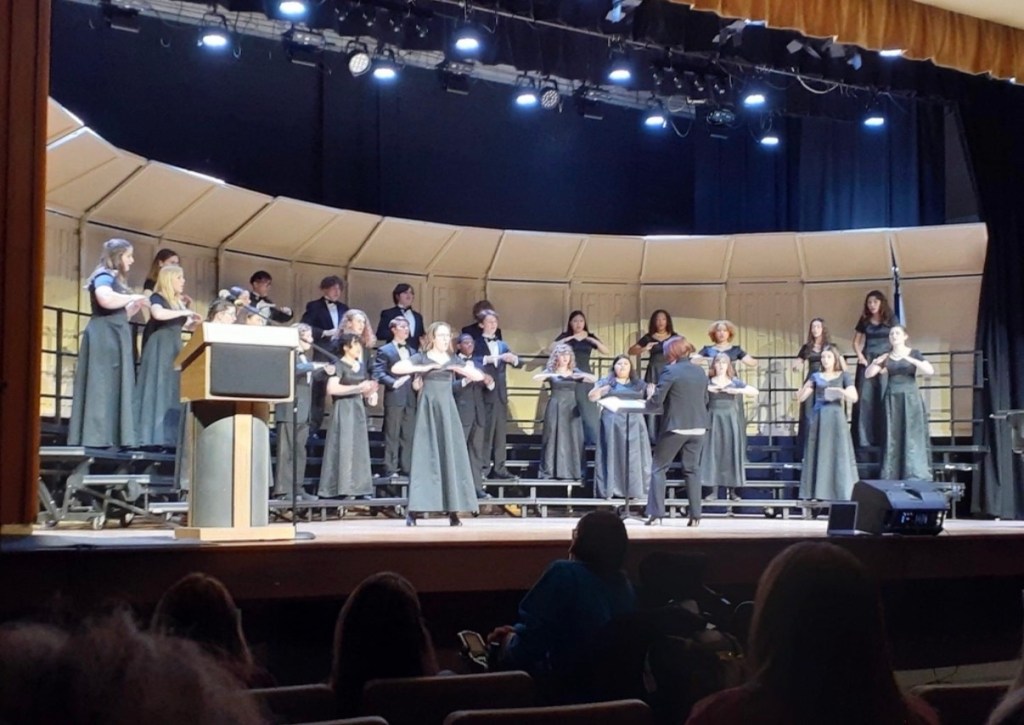
In April of 2023 (my freshman year), Mrs. Soares announced we were going to perform a piece titled “Ain’t No Grave Can Hold My Body Down” at our upcoming concert. This song was not only extremely challenging musically, but it had an extra component: it was intended to be performed with American Sign Language. Specifically, it was written to have an interpreter sign the entire piece, and the ensemble sign the repeated chorus throughout. Then, it would come to a moment where the entire choir was silent and just signed the chorus to signify what a deaf person experienced.
I don’t know what propelled me to do this – and my best friend at the time almost talked me out of it – but I asked Mrs. Soares if I could be the one who signed the entire song. She agreed – which I’m forever grateful for, among so many other things – and told me that I could learn it as long as I stayed solid on the soprano 2a part in case the chorale needed me. So, I went home and started learning.
The next four weeks were a whirlwind of research, recordings of my practice and progress, and drilling both the sign language and my divisi. Mrs. Soares was absent the week before the concert, and I created eleven videos so the chorale could learn the ASL and then practice what they were signing as they heard their divisi (because I knew if they didn’t learn it the week before the concert, it wouldn’t be in their bodies enough for them to be comfortable on performance night). It ended in a stellar performance, and a changed kid.
This song is the reason I am the worker, leader, and performer I am today. It’s the reason I performed “Do You Hear What I Hear” – both singing and signing – for the winter concert (please enjoy the irony). It’s the reason I want to double major in music and communications and get a certificate/third major/minor in American Sign Language. I want to show the world that hard-of-hearing people can thrive as musicians, and I want others to feel seen and heard (ha). This song made me – well – me.
So, yeah. I’m not cool; never have been and never will be about this specifically. Mrs. Soares may have seen me almost vibrating in excitement several times. And Sean Ivory may think I’m crazy. But I didn’t just leave All-State this year with a funny story to tell people of how I met my musical idol – the guy who wrote the song that changed my life. I left with a sense of belief in myself and a drive to pursue my passions.
Mr. Ivory and I had a series of conversations related to the arranging of “Ain’t No Grave Can Hold My Body Down”; from the awful circumstances while the piece was being arranged that were extremely similar to events that took place while the Pilgrim Chorale was preparing for our concert to choices made for the piece. I think a lot about the fact that Paul Caldwell and Sean Ivory added the ASL just because they thought it would be cool. You truly never know how you’ll impact someone in this life, even with things that may have seemed small.
Mr. Ivory was also a breath of fresh air in rehearsals, with a wildly different vibe from Dr. Pearl Shangkuan. Don’t get me wrong; working with Dr. Shangkuan was incredible. She was so brilliant and so kind – she always made sure my microphone was on and that I could hear her. I made it to the final round of solo auditions, sang it in front of her, and received a handshake. But the two of them had totally different vibes, and yet, they were so funny together. There was truly so much I learned from this entire All-State experience.
I’ve done a lot of reflecting recently, and I think a lot about how there are no words to describe the immense gratitude I have because Mrs. Soares gave me the opportunity to learn and perform the American Sign Language for “Ain’t No Grave Can Hold My Body Down” my freshman year. I could thank her over and over again for the trust she displayed and instilled in me during those few weeks, that five minutes during the concert, and every moment after.
But the other person I wish I could thank again? Sean Ivory. For everything from his belief in me to his message on my copy of my music to even just exchanged smiles.
There’s a freshman who resides in a corner of my heart with hope, as well as a sprinkle of anxiety – a girl who maybe wasn’t sure if she was on the correct path. If I could tell her that Mr. Ivory believes we will go on to do great things, I would. But for now, there’s a soon-to-be college freshman who holds enough belief and passion to no longer allow doubts to stop her. Maybe she’ll be a composer and arranger writing songs she can’t imagine will impact people the way they will, maybe she’ll conduct treble choirs because she can’t always hear bass notes, maybe she’ll run social media accounts for choirs, or maybe she’ll be a teacher and performer combining American Sign Language and singing; bridging a gap between musicians and hard-of-hearing people.
But in the meantime, I’m so grateful. To Mrs. Soares, to Tim Vongsena for recommending the song to Mrs. Soares, and to Mr. Ivory for doing what he loves. I hope to one day inspire someone like he inspired me.


Leave a Reply