
by Jillian Mastrostefano
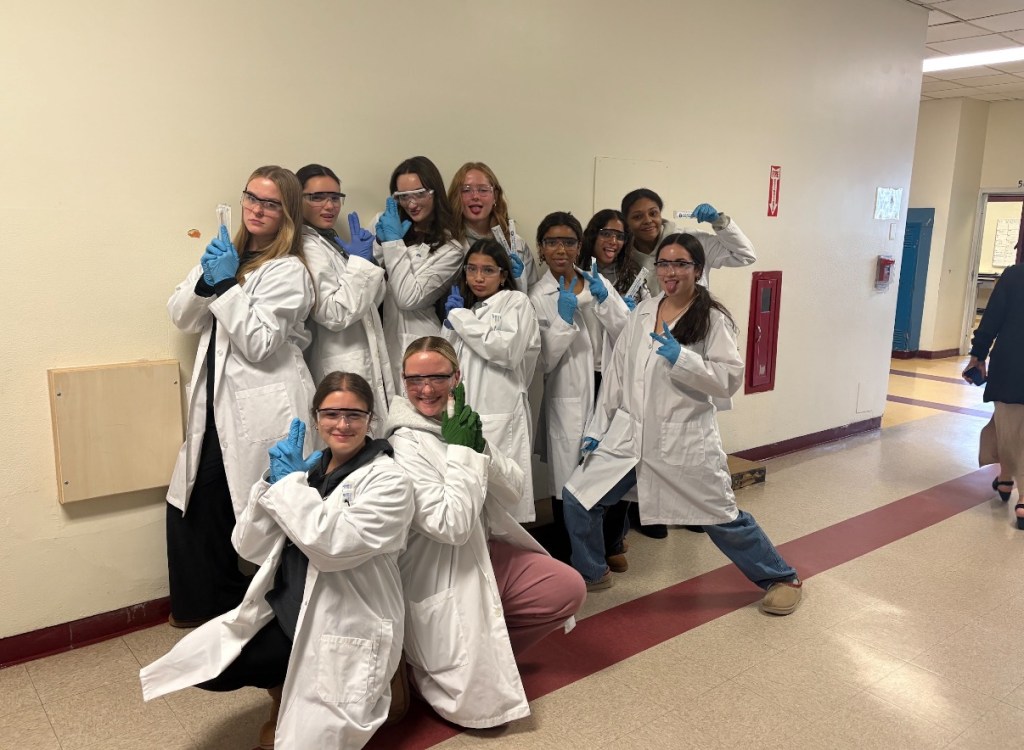
Every year, one of Pilgrim’s science teachers, Dr. Savery, designs a unique assignment for her Biotechnology classes. The students go around the school, choosing any object, location, or entity to swab and then analyze for bacteria. These biotechnology classes receive numerous unique learning opportunities throughout the year, but this experience is one of her best. It allows the students a scope within the real world, a setting they are familiar with, while gaining a deeper understanding of biotechnology aspects.
In this lab, students chose any two locations or objects, swabbed them, followed by spreading the samples onto two separate petri dishes, and then letting them sit in an incubator for a few days. After a few days, the samples grew various colonies of bacteria, some more gross than others. Each sample had different species, shapes, groupings, and gram status. To determine each of these factors, the students followed intense steps of procedure to get a clear picture of the bacteria within each sample. They got to use several solutions such as crystal violet, iodine, ethanol, and safranin to color and clean the samples, then used microscopes to analyze them.
This experiment allowed students to get experience as biotechnicians, learning about different types of bacteria, including how to see and where to find them. From growing plants, performing titrations and dilutions, and swabbing for bacteria, Dr. Savery’s biotechnology class is an incredible opportunity for the future scientists at Pilgrim High School. It provides numerous unique experiences such as this one, and will continue with similar assignments all year, ultimately creating the perfect balance of making science fun and educational.
 The Black and White
Leave a comment